Choosing a medical device supplier is not a simple price comparison. The World Health Organization’s Medical Devices fact sheet reports more than two million types of medical devices worldwide, grouped into over 7,000 generic categories. That scale matters. A supplier of diagnostic imaging systems needs different capabilities from one producing disposable examination tools.
China’s medical device sector includes manufacturers, contract producers, and export-focused suppliers. Yet a polished catalogue cannot confirm consistent quality. The ISO Survey of Management System Standard Certifications tracks ISO 13485 certificates, offering one useful reference point for quality management. Certification alone, however, does not prove that every product or shipment will meet a buyer’s needs. Ask for current certificates, product-specific documentation, inspection records, and clear answers about traceability and after-sales support.
This guide examines ten Chinese suppliers through practical criteria, including product range, manufacturing experience, quality systems, and export readiness. It also considers how to select reliable medical device suppliers without treating a directory as an endorsement. A supplier’s website may show a clean production line; an audit should still verify the process behind it. Rankings can look tidier than reality, and available public information is uneven. That limitation deserves attention. Buyers should confirm details directly, assess requirements for their intended market, and compare evidence rather than promises before making a decision.
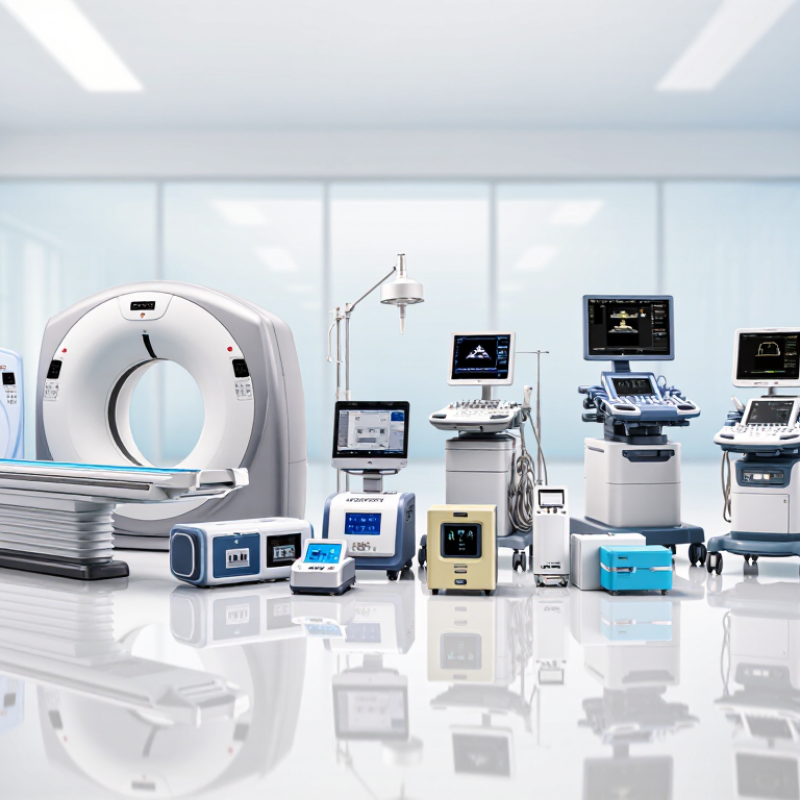
A reliable medical device supplier in China should make quality visible, not merely promise it. Ask how incoming materials are checked, how production batches are identified, and how inspection results are recorded. Traceability matters. Request sample records and confirm that they match the product and manufacturing site being discussed. A supplier should also explain how design changes, defects, and customer complaints are reviewed. Clear answers are useful; vague assurances are not.
Review documents carefully, but do not treat a polished file as proof of consistent production. When possible, assess the facility, inspect representative samples, and compare stated procedures with what workers actually do. Small details can reveal gaps: an unlabeled component tray, a missing revision date, or unclear inspection criteria. Ask who handles technical questions and how quickly issues are escalated. Reliable communication is specific and timely. It is not always perfect. Notice whether the supplier acknowledges uncertainty, corrects errors, and provides evidence rather than rushing past difficult questions. A credible assessment takes time, and one visit may still leave unanswered questions.
Reliable medical device suppliers are evaluated through evidence, not factory size or attractive catalogs. The World Health Organization identifies more than 2 million medical device types across over 7,000 generic groups. This variety makes product-specific assessment essential. A capable supplier should show ISO 13485-based quality controls, valid registration records, risk files, design-change history, and traceable batch documents. ISO’s Survey also records tens of thousands of ISO 13485 certificates worldwide, so certification alone cannot separate strong suppliers from average ones.
Practical evaluation starts with a technical audit. Inspect calibration labels, incoming-material records, cleanroom controls, packaging tests, and complaint-handling procedures. Review sample inspection reports, not only polished presentations. For China-based suppliers, confirm product registration requirements with the National Medical Products Administration and the destination market’s regulator. Check whether production records match the approved specifications. Delivery reliability matters too. Compare promised lead times with actual shipment data, rejection rates, corrective-action closure, and spare-parts availability. A low quotation may conceal weak validation or unstable subcontracting. It often does.
Tips: Use a weighted scorecard. Give quality and traceability more weight than price. Request three recent batches, audit the records, and interview the quality manager. Verify one certificate directly with its issuing body. A supplier can pass an audit and still fail under rapid demand. That limitation deserves attention. Reassess performance quarterly, especially after material changes, complaints, or production transfers.
| No. | Evaluation Dimension | What Should Be Verified? | Relevant Standard or Evidence | Suggested Weight | Reliability Benchmark |
|---|---|---|---|---|---|
| 1 | Quality Management System | Confirm that the manufacturer operates a documented, implemented, and regularly audited quality management system. | Valid ISO 13485 certification issued by an accredited certification body; current audit and corrective-action records. | 15% | Current certificate and no unresolved critical findings |
| 2 | Regulatory Compliance | Assess whether the supplier can support product registration, technical documentation, vigilance, and post-market obligations in the target market. | Applicable requirements under China NMPA, the EU Medical Device Regulation 2017/745, or United States FDA requirements, depending on destination. | 15% | Complete market-specific compliance file |
| 3 | Product Safety and Risk Management | Review how hazards are identified, evaluated, controlled, and monitored throughout the product life cycle. | Risk-management file aligned with ISO 14971:2019, including benefit-risk analysis and residual-risk controls. | 12% | Documented risk controls with traceable verification |
| 4 | Manufacturing Capability | Evaluate production capacity, process validation, cleanroom controls, equipment maintenance, and batch traceability. | Validated critical processes, controlled work instructions, calibration records, environmental monitoring, and lot-level traceability. | 12% | Stable process capability and complete production records |
| 5 | Testing and Validation | Confirm that products are tested for performance, safety, usability, packaging integrity, and shelf life before release. | Approved test protocols, validation reports, inspection records, and applicable standards such as IEC 60601-1 or IEC 62304. | 10% | Independent or qualified laboratory evidence |
| 6 | Supplier and Material Control | Check the qualification and monitoring of raw-material suppliers, component sources, and outsourced processes. | Approved supplier list, incoming inspection criteria, material certificates, change-control records, and supplier-audit results. | 8% | Qualified critical suppliers and documented incoming controls |
| 7 | Delivery Performance | Measure the supplier’s ability to deliver consistent quantities within agreed lead times and specifications. | Historical on-time delivery data, order-fulfillment records, capacity plans, and documented business-continuity procedures. | 8% | Consistent delivery against signed purchase terms |
| 8 | Traceability and Corrective Action | Verify that defects can be traced to affected lots and that complaints are investigated through formal corrective and preventive action. | Unique lot or serial records, complaint files, recall procedures, nonconformance reports, and CAPA effectiveness checks. | 8% | Fast traceability and verified CAPA closure |
| 9 | Technical Support and Communication | Assess responsiveness, engineering support, document control, training, and communication during design or production changes. | Defined escalation contacts, response-time records, controlled technical documents, training materials, and formal change notifications. | 6% | Clear records and timely technical responses |
| 10 | Commercial and Ethical Reliability | Review financial stability, contract transparency, intellectual-property practices, data protection, and anti-bribery controls. | Audited business information where available, signed quality agreements, confidentiality controls, compliance policies, and transparent terms. | 6% | Transparent contracts and no unresolved integrity concerns |
| Total Suggested Evaluation Weight | 100% | Evidence-based review | |||
Note: A reliable supplier should be evaluated using current certificates, audit evidence, product-specific technical files, quality records, and destination-market requirements rather than price or marketing claims alone.
China’s medical device sector now spans imaging, diagnostics, monitoring, surgery, rehabilitation, and hospital consumables. The China Association for Medical Devices Industry estimated market value above RMB 1 trillion in recent industry reports. That scale creates choice, but also confusion. Supplier quality is uneven.
The ten profiles focus on different strengths: one imaging manufacturer develops CT systems; another specializes in ultrasound. Two suppliers concentrate on in-vitro diagnostics and laboratory automation. One serves patient monitoring, while another produces anesthesia and respiratory equipment. Additional profiles cover surgical instruments, dialysis systems, rehabilitation devices, dental equipment, and sterile consumables. This structure reflects practical hospital purchasing needs, not just company size.
Reliability should be tested through evidence. The NMPA registration database can confirm product approval status and manufacturing details. ISO 13485 certification supports quality-system assessment, but it does not guarantee every shipment performs perfectly. The World Health Organization also stresses risk management, maintenance, and trained users across the device lifecycle. A supplier with local service engineers, traceable spare parts, validation records, and clear complaint handling deserves closer attention. Delivery history matters too. A low quotation can hide training gaps or delayed repairs.
These profiles remain a starting point. Market rankings change quickly. Some suppliers publish limited performance data, which deserves criticism. Buyers should request clinical references, audit reports, warranty terms, and cybersecurity controls before signing contracts. Procurement teams should also compare failure rates, not only purchase prices. The strongest choice may be less obvious.
Their manufacturing capabilities differ considerably. Some operate cleanrooms for sterile disposables and injection-molded components. Others use CNC machining, precision stamping, or automated electronics assembly for diagnostic and monitoring equipment. Strong suppliers also support prototype development, tooling, firmware testing, packaging validation, and batch traceability. These details matter when hospitals need consistent performance across large orders.
From my review experience, supplier reliability depends on evidence, not impressive catalogs. Request production samples, material certificates, inspection records, and device registration documents before making a decision. Factory audits should examine calibration logs, operator training, complaint handling, and change-control processes. No supplier is perfect. A low price may hide weaker documentation, slower technical support, or limited spare-part planning. Even capable factories can struggle with communication during urgent revisions. Buyers should compare lead times, validation depth, after-sales response, and customization limits against the device’s intended clinical use. Supplier claims require verification.
China’s Top 10 Reliable Medical Device Suppliers?
Supplier rankings can attract attention, but verification matters more than a polished webpage. A reliable medical device supplier should provide a valid business license, manufacturing address, and clear product ownership. Check whether its quality system follows ISO 13485 requirements. Confirm certificates directly through official or accredited databases when possible.
Regulatory documents must match the exact product, model, and manufacturing site. For China, review applicable registration or filing records with the national medical products authority. For export markets, request evidence of conformity, risk management, clinical evaluation, and electrical safety testing when relevant. A certificate with the wrong model number is a serious warning.
Ask for recent batch records, inspection reports, calibration logs, and complaint-handling procedures. During a factory audit, compare the production line with the documents provided. Watch how workers identify components and control rejected units. Request a sample from normal production, not a specially prepared sample. Small details matter.
Do not trust certificates alone. An audit can miss problems, especially when translation hides technical gaps. My own assessment would remain cautious until supplier responses stay consistent across sales, quality, and factory teams. Verify corrective actions with evidence, not promises. Keep written records of every check, including document dates, responsible contacts, and unresolved questions.
This chart compares the number of formal medical-device risk classes used by major regulatory systems. The United States FDA uses Class I–III, the European Union MDR uses Class I, IIa, IIb and III, China’s NMPA uses Class I–III, and Japan uses Class I–IV. When evaluating a Chinese supplier, confirm that its product classification, registration or filing status, quality-management certification, technical documentation and post-market controls match the destination market.
Sources: U.S. FDA device classification framework; Regulation (EU) 2017/745 on medical devices; China NMPA medical-device classification framework; Japan Pharmaceuticals and Medical Devices Agency classification framework.
The sector includes imaging, ultrasound, diagnostics, monitoring, surgery, rehabilitation, and hospital consumables. Some suppliers focus on narrow specialties. Others offer broader portfolios.
Request a valid business license, manufacturing address, and clear product ownership. Check official registration records and confirm the manufacturing site. Do not rely on a polished website.
Approval usually applies to a specific product, model, and manufacturing location. A certificate with the wrong model number creates a serious warning. Small document errors can signal larger control problems.
No. It supports quality-system assessment, but it cannot guarantee every shipment performs perfectly. Buyers should also review batch records and complaint history.
Request audit reports, clinical references, warranty terms, inspection records, and calibration logs. For connected devices, ask about cybersecurity controls. Keep unresolved questions in writing.
Compare the production line with the submitted documents. Watch how workers identify components and separate rejected units. Ask for a normal production sample.
Local service engineers can shorten repair delays. Traceable spare parts, maintenance records, and trained users support safer operation. A low price may hide weak training or slow support.
Not automatically. Compare failure rates, delivery history, repair response, and training support. The cheapest option may not be the strongest choice. I would still hesitate.
This article provides a practical guide to identifying China’s top 10 reliable medical device suppliers without relying solely on company size or marketing claims. It explains what defines a dependable supplier, including consistent product quality, advanced manufacturing capabilities, transparent communication, stable production capacity, professional technical support, and a strong commitment to patient safety. It also introduces a structured evaluation approach based on product categories, quality management systems, production standards, customization services, delivery performance, and after-sales support.
The article further summarizes the key products and manufacturing capabilities commonly offered by leading Chinese suppliers, while outlining how buyers can verify certifications, factory information, testing records, and regulatory compliance before cooperation. By comparing documentation, conducting supplier audits, requesting samples, reviewing quality-control procedures, and clarifying contractual responsibilities, purchasers can better understand how to select reliable medical device suppliers and reduce procurement risks. The goal is to support informed, compliant, and long-term international cooperation.

Seeker Medical